Major Foundations of Curriculum
·
Philosophical
·
Historical
·
Psychological
·
Social
Philosophical Foundations
Philosophical Foundations of Curriculum
·
Essentialism
Aim of Education – To promote the intellectual growth of
the individual and educate a competent person.
Role of Education –
The teacher is the sole authority in his or her subject area or field of
specialization.
Focus in the Curriculum –
Essential skills of the 3 R’s and essential subjects.
Curriculum Trends –
Excellence in education, back to basics and cultural literacy.
·
Progressivism
Aim of Education –
To promote democratic and social living.
Role of Education –
Knowledge leads to growth and development of lifelong learners who actively
learn by doing.
Focus in the Curriculum –
Subjects are interdisciplinary, integrative and interactive. Curriculum is
focused on students’ interest, human problems and affairs.
Curriculum Trends –
School reforms, relevant and contextualized curriculum, humanistic education.
·
Reconstructionism
Aim of Education –
To improve and reconstruct society. Education for change.
Role of Education –
Teachers act as agents of change and reform in various educational projects
including research.
Focus in the Curriculum –
Focus on present and future trends and issues of national and international interest.
Curriculum Trends –
Equality of educational opportunities in education, access to global education.
Historical Foundations
Historical Foundations of Curriculum
•
Curriculum
Theorists
-
Franklin Bobbit
-
Werret Charters
-
William Kilpatrick
-
Harold Rugg
-
Hollis Caswell
-
Ralph
Tyler
-
Hilda
Taba
-
Peter
Oliva

Franklin Bobbit
1876 – 1956

Werret Charters
1875 – 1952
Considered curriculum also as
a science which is based on students' need, and the teachers plan and activities.

viewed curriculum as purposeful activities which are child- centered.

emphasized social studies in
the curriculum and the teacher plans the lesson in advance.

sees curriculum as organized around social functions of themes, organized knowledge and learner's interests.


Contributed to the theoretical and pedagogical foundations of concepts development and critical thinking in social studies curriculum
Helped lay the foundation for
diverse students

·
Describe how curriculum change is a cooperative
endeavour
·
Teachers and curriculum specialist constitute
the professional core of planners
· Significant improvement through group activity
Psychological Foundation of Curriculum
·
Cognitive
Theorists
-
Ivan Pavlov
-
Edward Thorndike
-
Robert Gagne
-
Jean Piaget
-
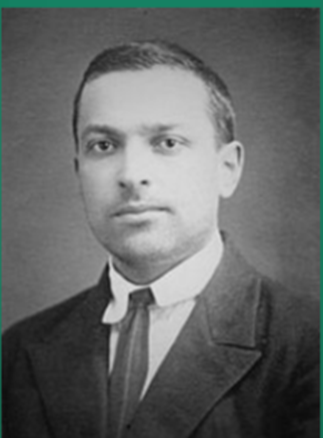
Lev Vgotsky
-
Howard Gardner
-
Daniel Goleman
-
Gestalt
-
Abraham Maslow
-
Carl Rogers

•
Father of the Classical Conditioning Theory the S-R
Theory
•
The key to learning is eraly years of life is to
train them what you want them to become.
•
S- R theory is a foundation of learning practice
called indoctrination.

·
Championed the Connectionism Theory
·
Proposed the three (3) law of learning:
-
Law of readiness
-
Law of exercise
-
Law of effect
·
Specific stimulus has specific response.

• Proposed the Hierarchy Learning Theory
• Behaviour is based on prerequisite conditions
•
Introduced tasking on the formulation of objectives.

·
Theories
Describe cognitive development
in terms of stages from birth to maturity
·
Key of Learning
a.
Assimilation
b.
Accommodation
c. Equilibration
·
Theories
-
Cultural transmission and development
-
Interaction to arriving developmental stage
-
Sociocultural development theory
·
Key of Learning
-
Pedagogy creates learning processes that lead to
development
-
Child is an active agent in his or her educational
processes.


• Emotions contains the power
to affect action

•
Theories
Wholeness
•
Key Learning
a.
Learning is complex or abstract
b.
Analyze the problem
c.
Learners perceive something in relation to the
whole


•
Nondirective and Therapeutic Learning
-
Established counselling procedures.
•
Key Learning
-
Curriculum concerned with process not product;
personal needs not the subject matter, psychological meaning not the cognitive
scores.
Humanistic Foundation of Curriculum
Social Foundations of Curriculum
•
School and Society
•
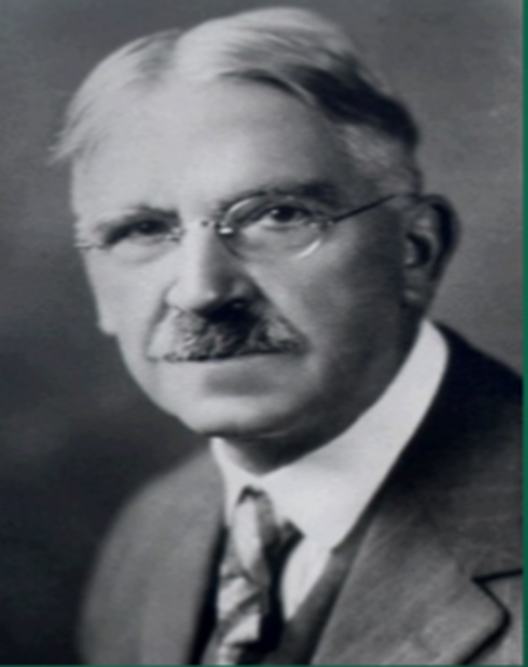
John Dewey
•
Alvin Toffer

Contribution
•
Society as a source of change
•
School as agent of change
•
Knowledge as an agent of change.
·
Considered two fundamental elements;
1.
School
2. Civil Society
